It started with one bass. As always.
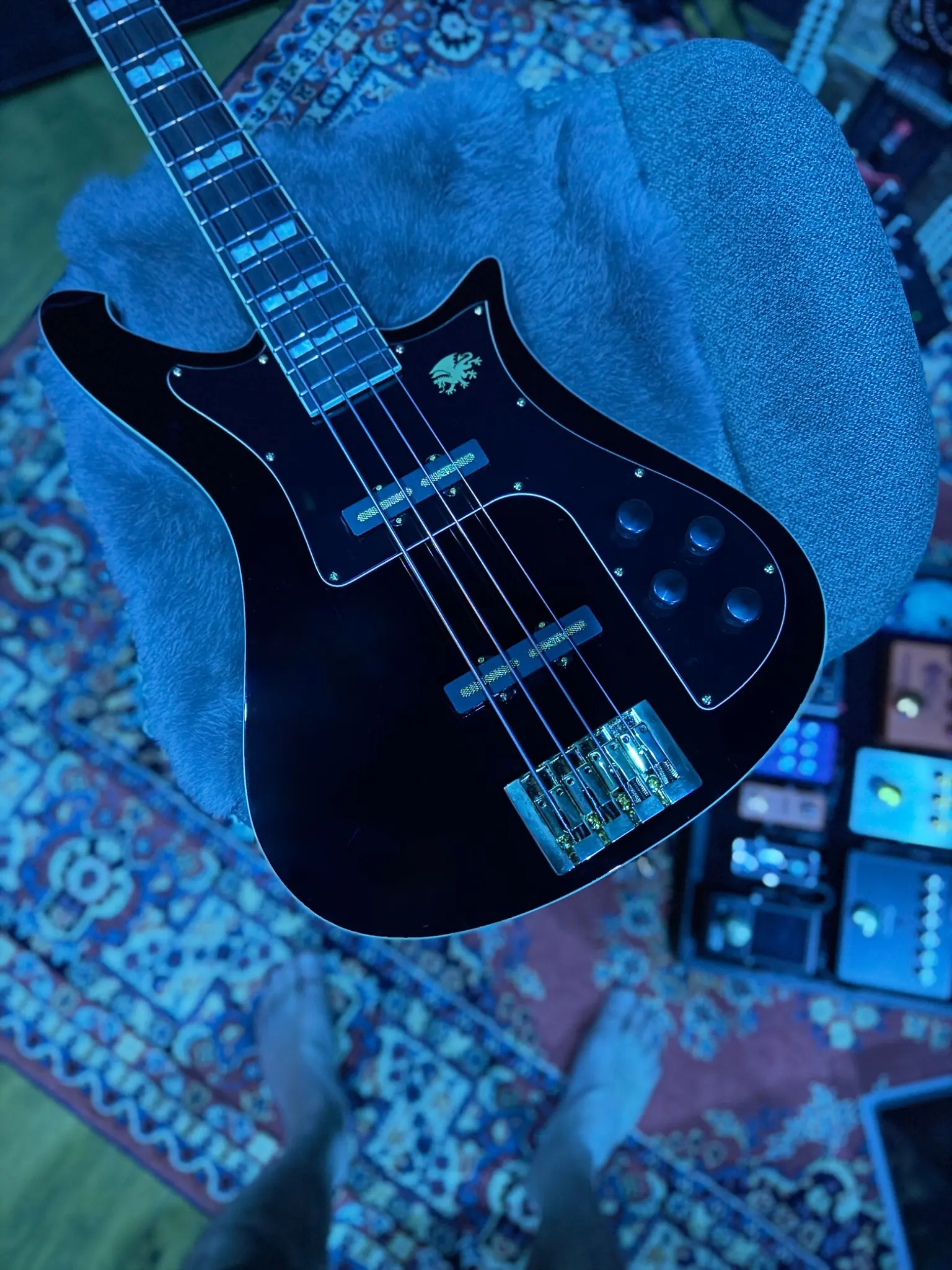
2 January 2024.
At around two in the morning, I couldn't sleep.
For reasons I still can't really explain, I opened a browser and started looking at bass guitars.
I'd talked about learning bass a few times over the years with a friend who plays. Each time it remained exactly that — a thought. Something that sounded like a good idea and then quietly disappeared again.
That night it didn't.
After some wandering around the internet, I found a Baum Nidhogg.
I looked at it for a while, hesitated for probably much less time than I should have, and pressed BUY.
I had never even held a bass guitar before.
That was the beginning.
Hi. My name is Kenno, and I have a problem.
The second bass came fairly quickly.
Then the third.
Then the fifth.
At some point there were thirteen of them.
For a while I thought: well, I suppose I have a collection now.
Then I realised a collection doesn't have to stand still.
Basses can come in, stay for a while, become part of your life, and then move on. Sometimes that's exactly what should happen. Sometimes you regret it afterwards.
Apparently that is also part of collecting.
I found Japan.
And things got worse.
Or better.
Japan opened up a completely different world.
There were old instruments I'd never seen before, forgotten models, strange factory variations, obscure brands and designs that seemed to come from a time when manufacturers were perfectly happy to try something unusual.
And then there were the signs of life — wear, fading and colours that had slowly changed over decades, sometimes blue turning green.
And there were a lot of them. Turns out, there’s a whole world of bass beyond Fender and Gibson.
Finding the right one takes patience. You go through listings, compare photographs, serial numbers, stamps, hardware and small construction details. Sometimes there is enough evidence to understand exactly what you're looking at.
Sometimes there isn't.
The search became part of the pleasure.
So did the waiting.
There is still something special about knowing a bass is somewhere between Japan and Estonia and wondering what it will actually feel like when it gets here.
Then the box arrives.
You open it.
You see the instrument properly for the first time.
The first impression. The sound. The neck. The way it feels in your hands.
That excitement still hasn't gone away.
Somewhere along the way, something changed.
At first, the excitement was mostly about the bass arriving to me.
Now I get at least as much pleasure from waiting for a bass to arrive to someone else.
Preparing an old bass for its next owner can take a surprising amount of time.
Cleaning it. Checking it. Researching it. Photographing it. Trying to understand what is original, what has changed and what still remains uncertain.
I don't pretend to know everything, and I don't pretend every old bass needs restoring. The important part is understanding what is there, what works, what has changed — and being honest about what I don't know.
If something needs specialist work, I'd rather have it done properly than pretend I can do everything myself.
Then packing it well enough to survive the journey.
And then it leaves.
After that comes another kind of waiting.
Did it arrive safely?
What does the new owner think?
That wait can somehow be even more exciting than waiting for a bass from Japan.
And when a message comes back saying that the instrument is even better than expected, or that someone can't stop playing it, that may be the best part of the whole thing.
A bass that spent some time here is now making music somewhere else.
I get a ridiculous amount of happiness from that.
Maybe I simply feel that I owe the world a little something back.
That's why Gruuvik Chamber exists.
Not because the world desperately needs another bass shop.
It probably doesn't.
Gruuvik Chamber exists because good instruments deserve to be played, old basses deserve honest stories, and finding the right instrument can make someone very, very happy.
I know that feeling.
I still get it myself.
For me, this has slowly become less about owning as many basses as possible and more about finding them, understanding them, spending some time with them — and, at some point, letting them go.
If one of those instruments eventually ends up with someone who loves it, plays it and is genuinely happy to have found it, then all the searching, waiting, cleaning, researching, photographing and packing feels worthwhile.
Maybe Gruuvik Chamber is simply my way of giving some of that feeling back.
And making a few people happy along the way.