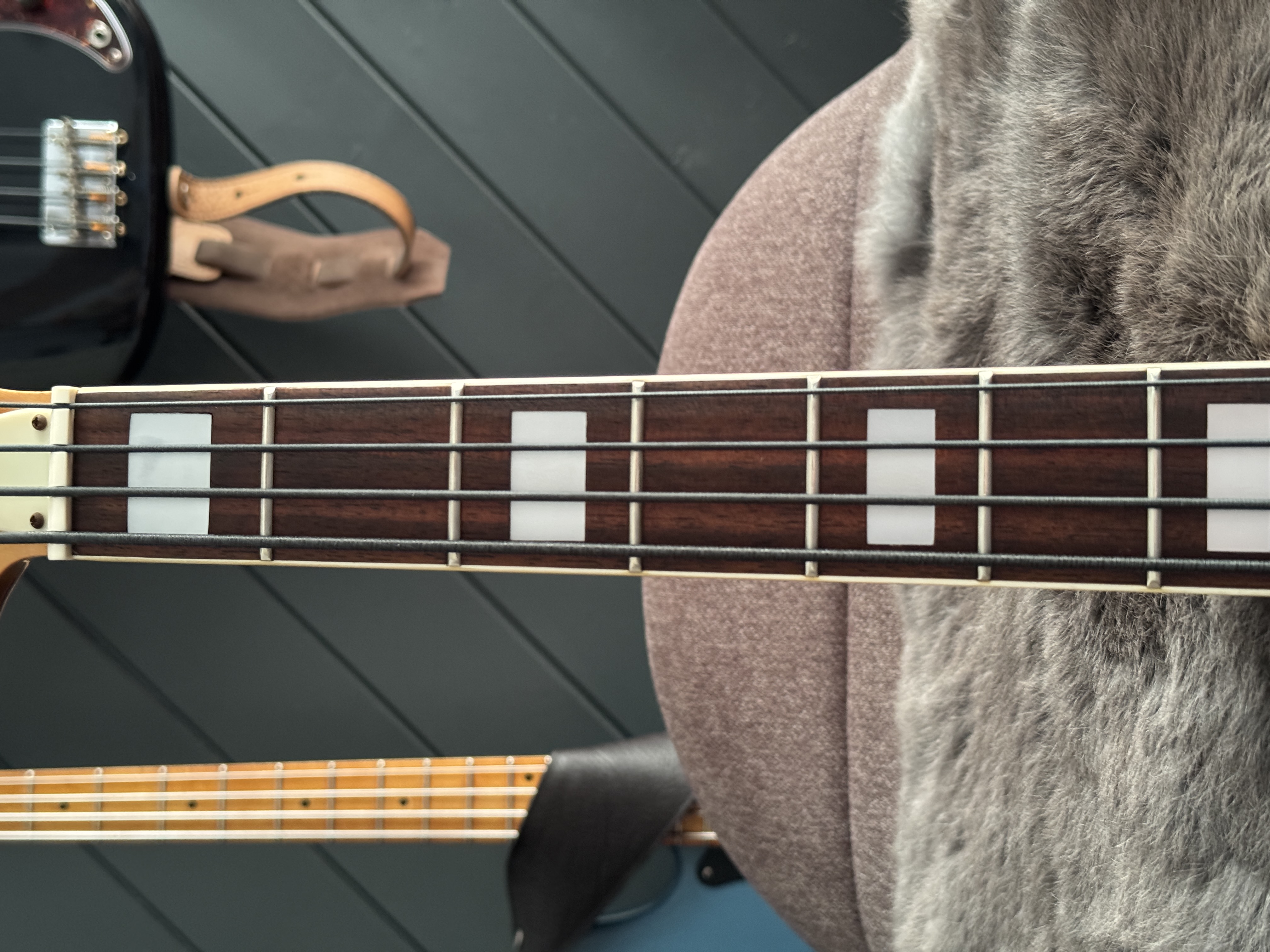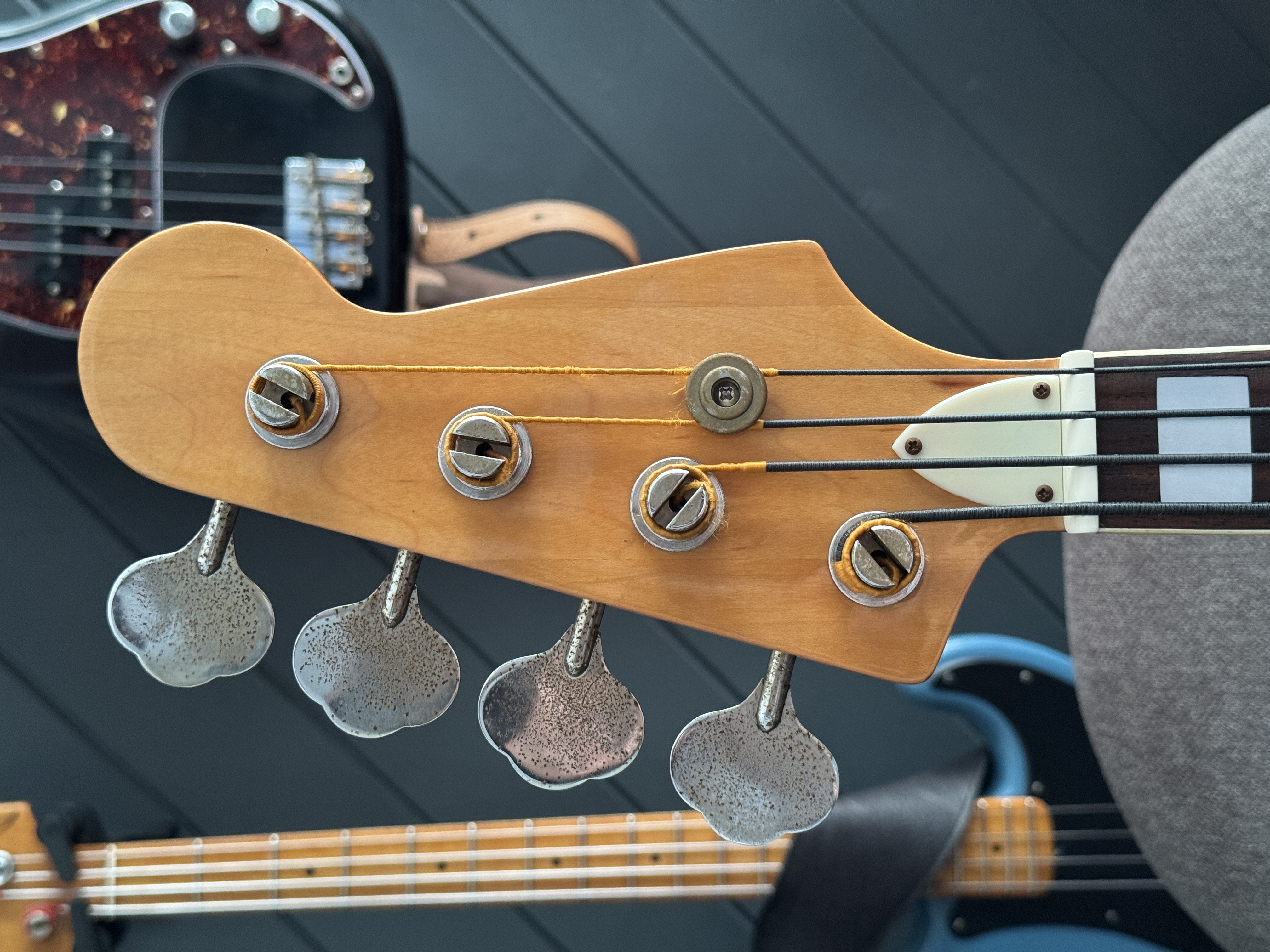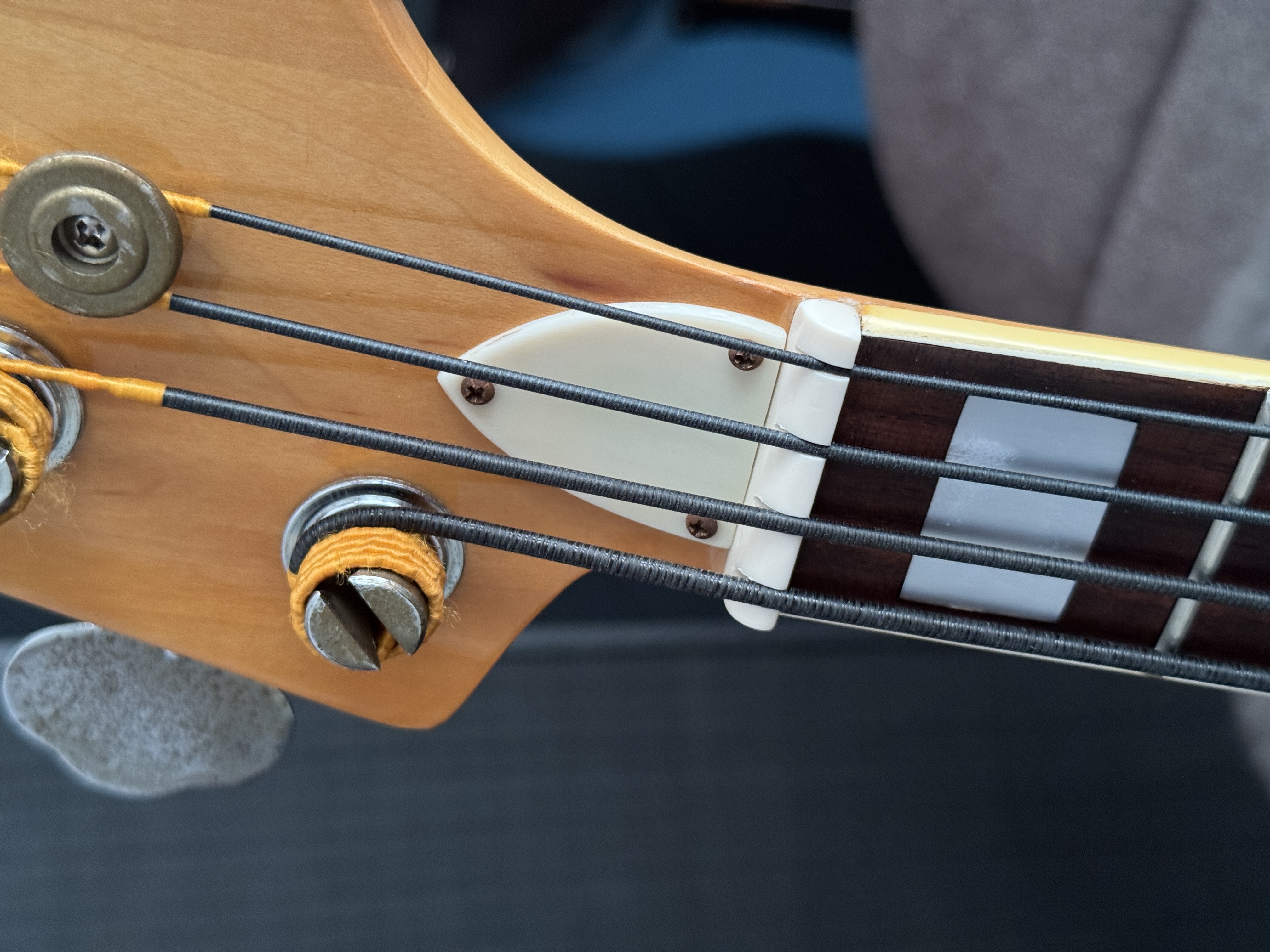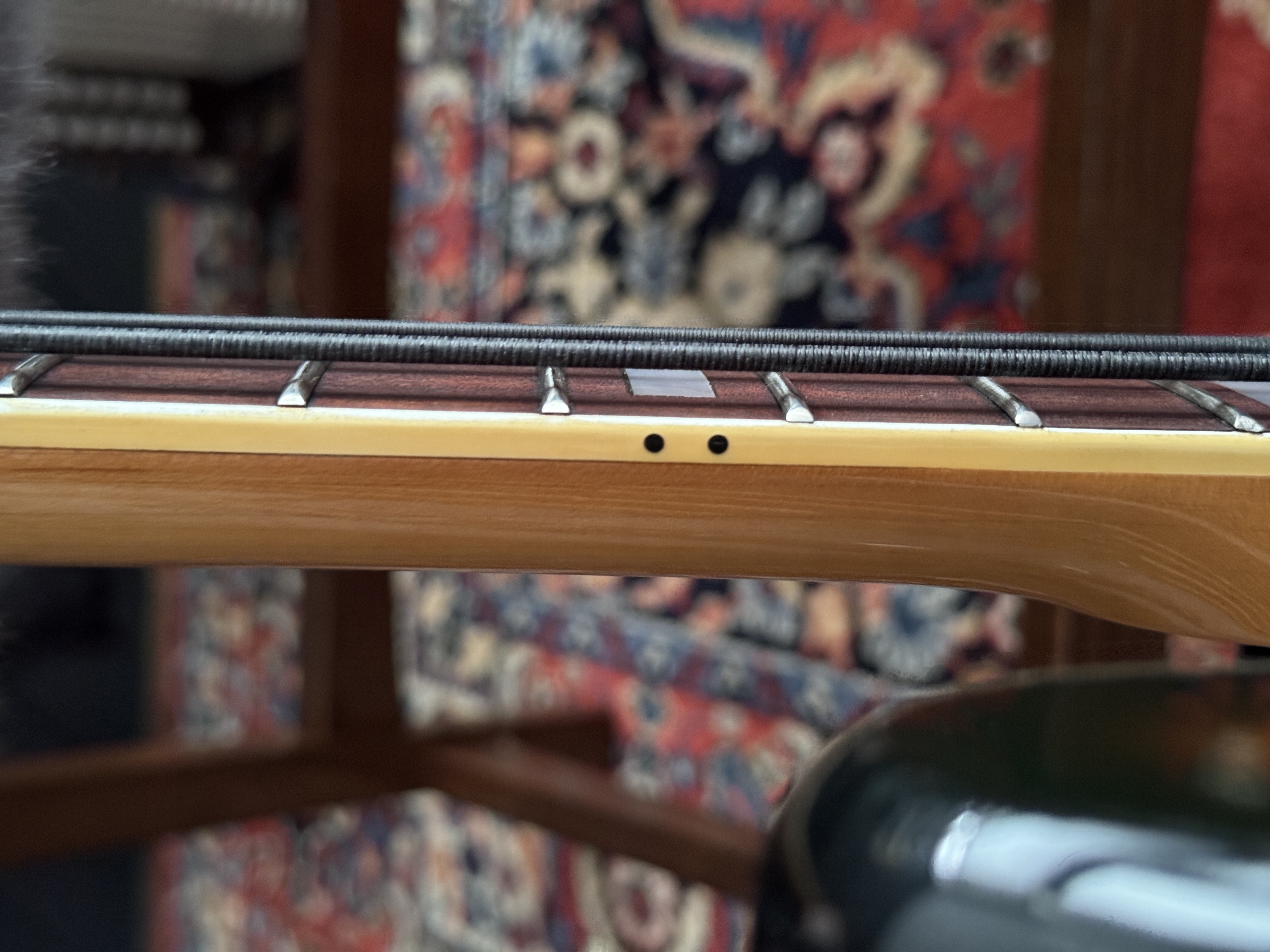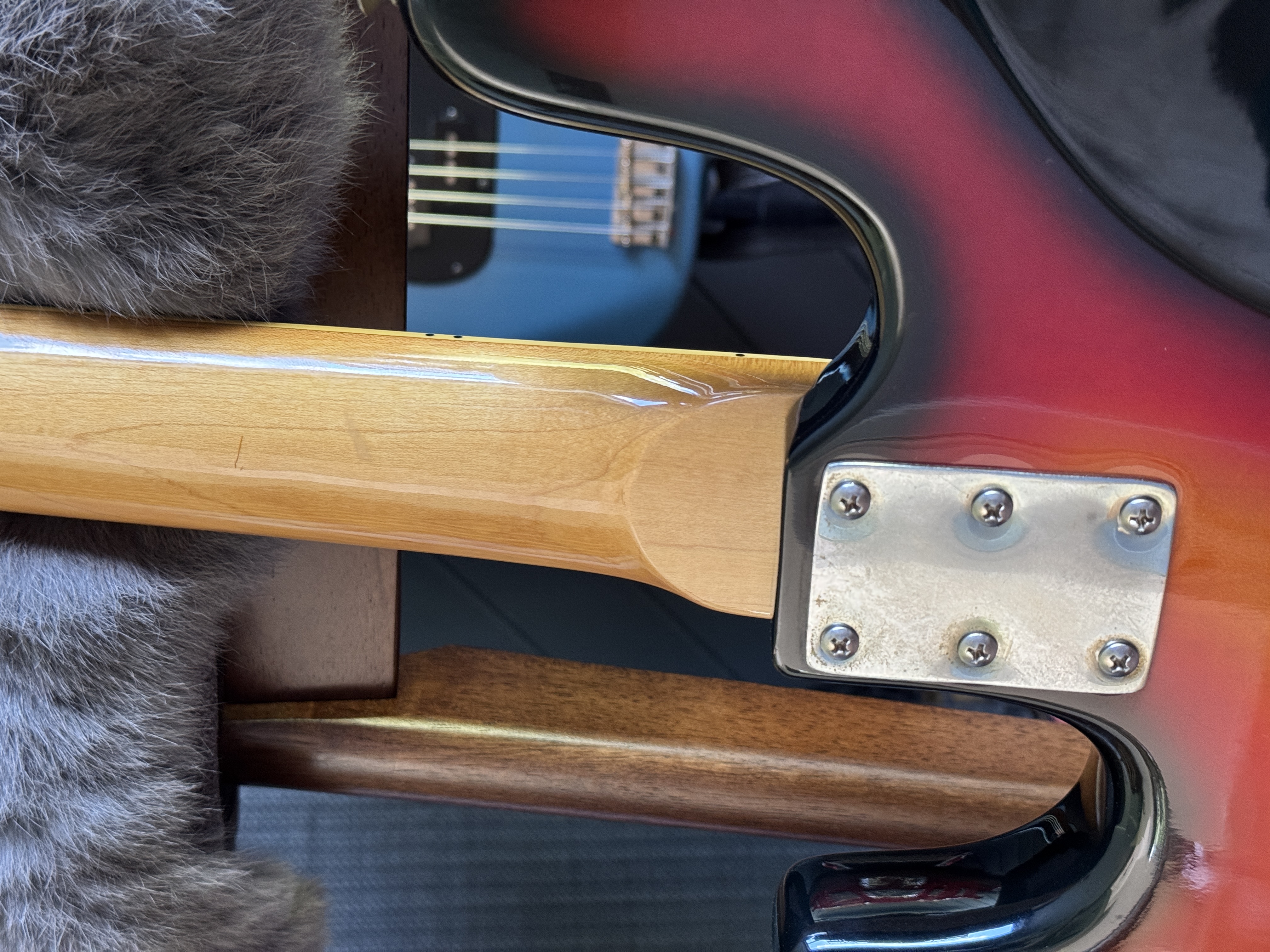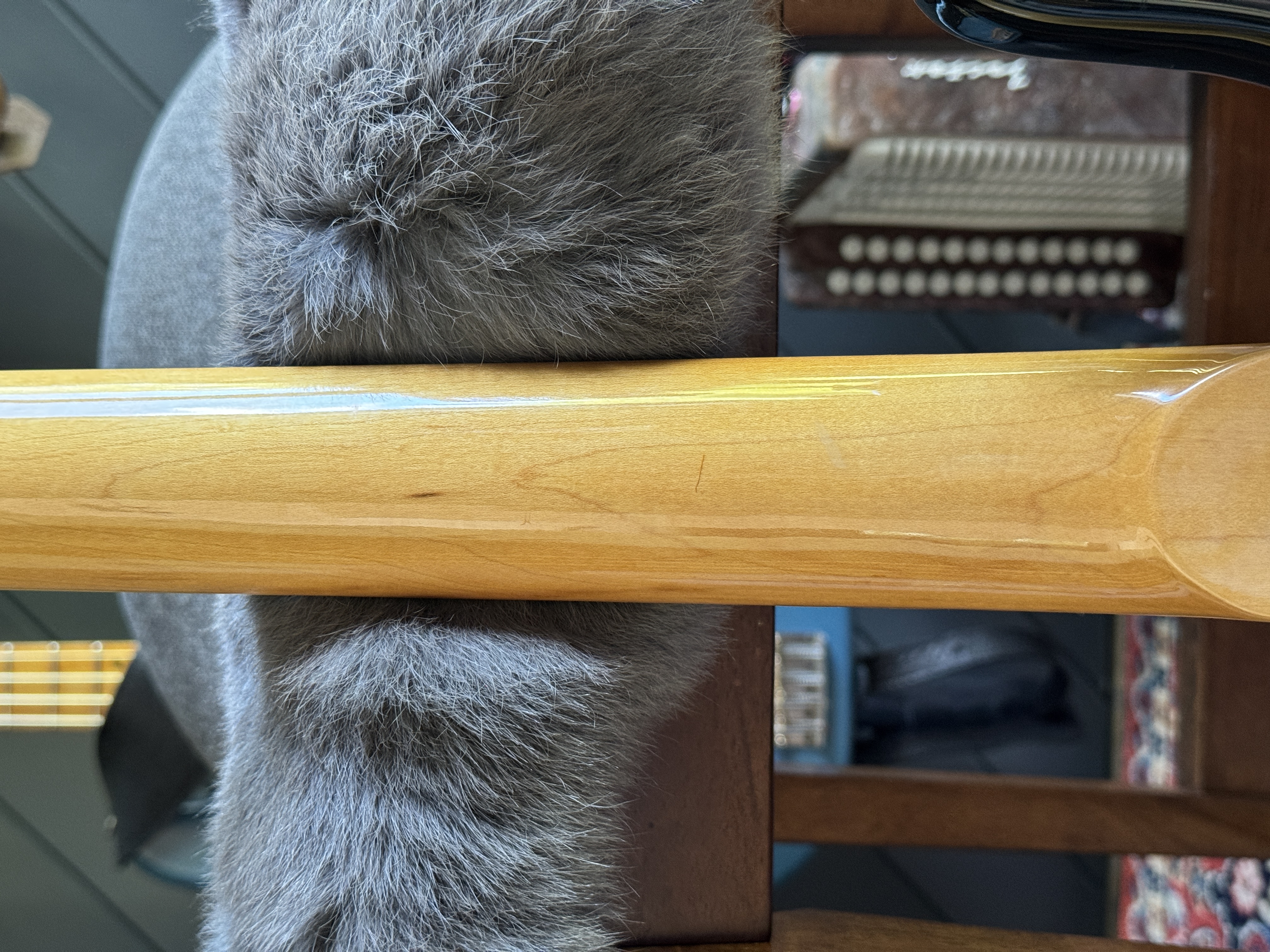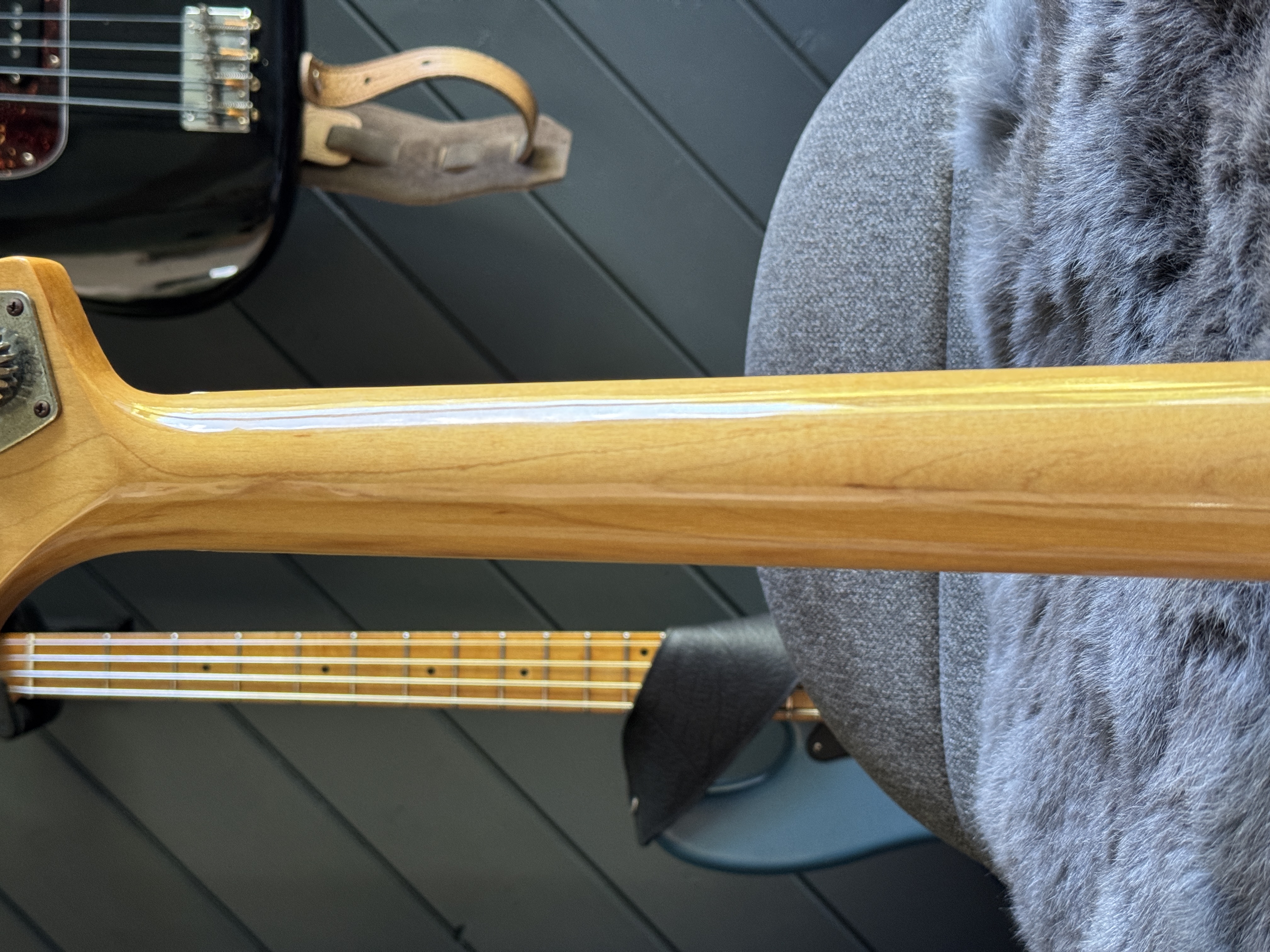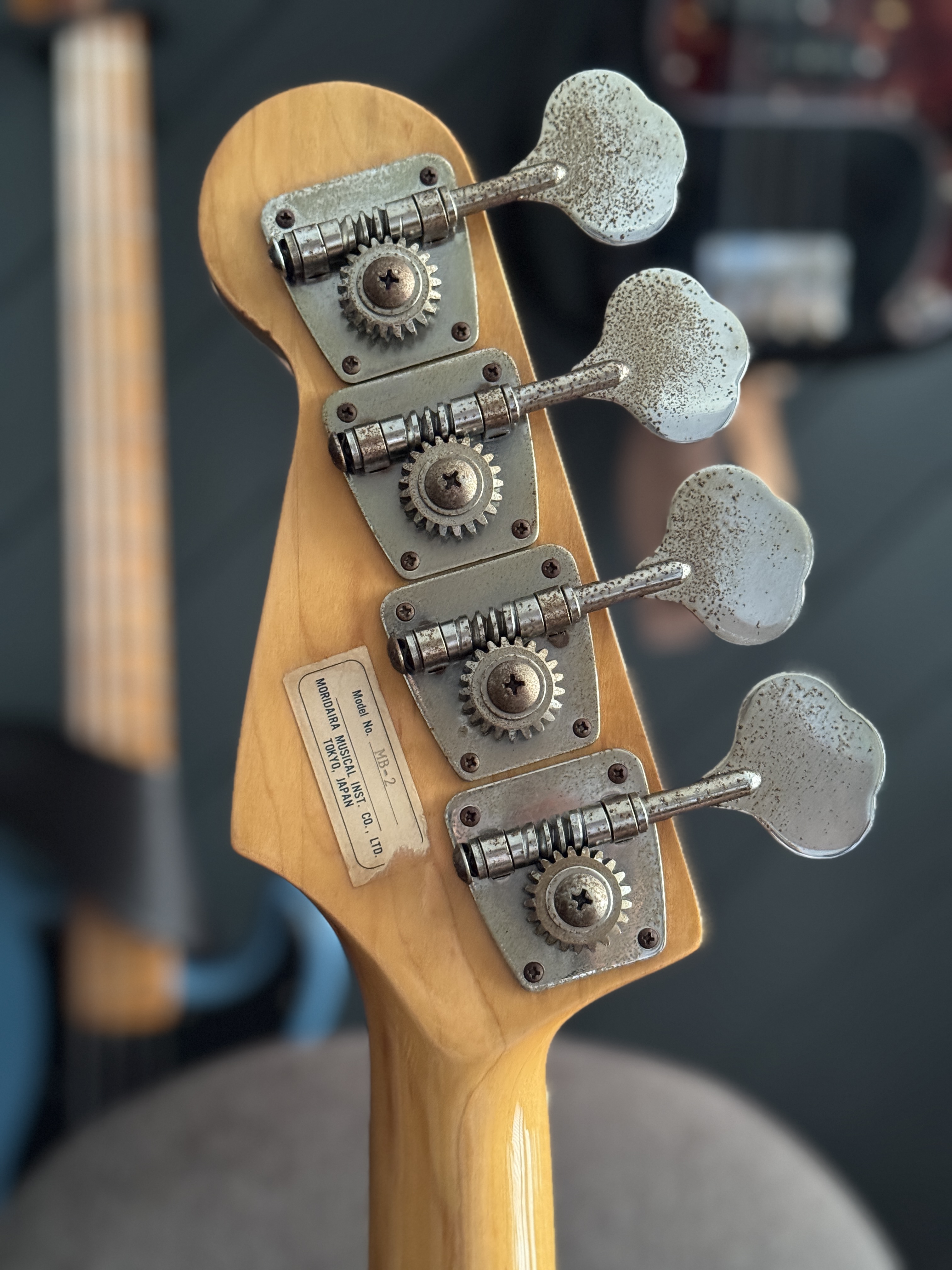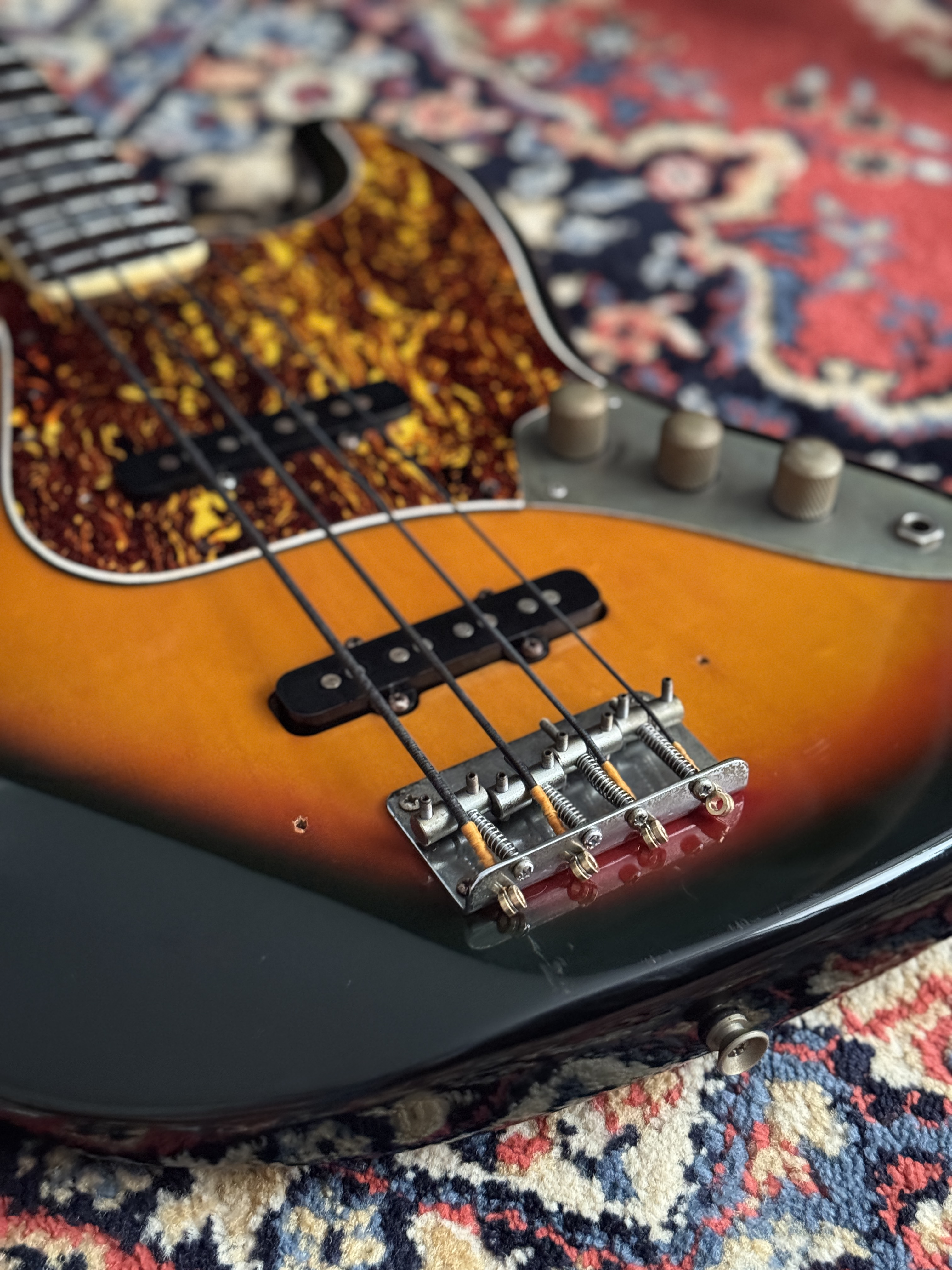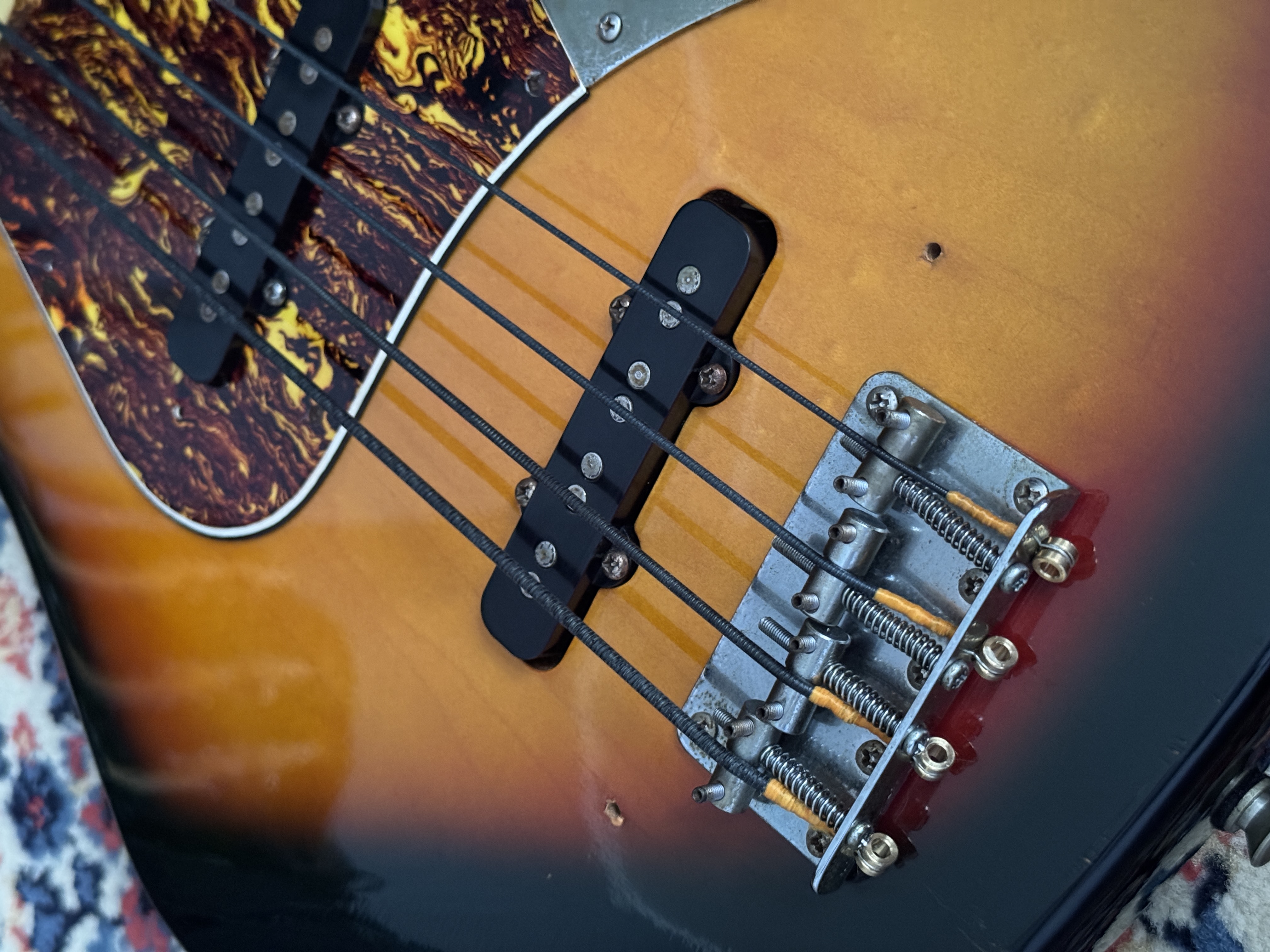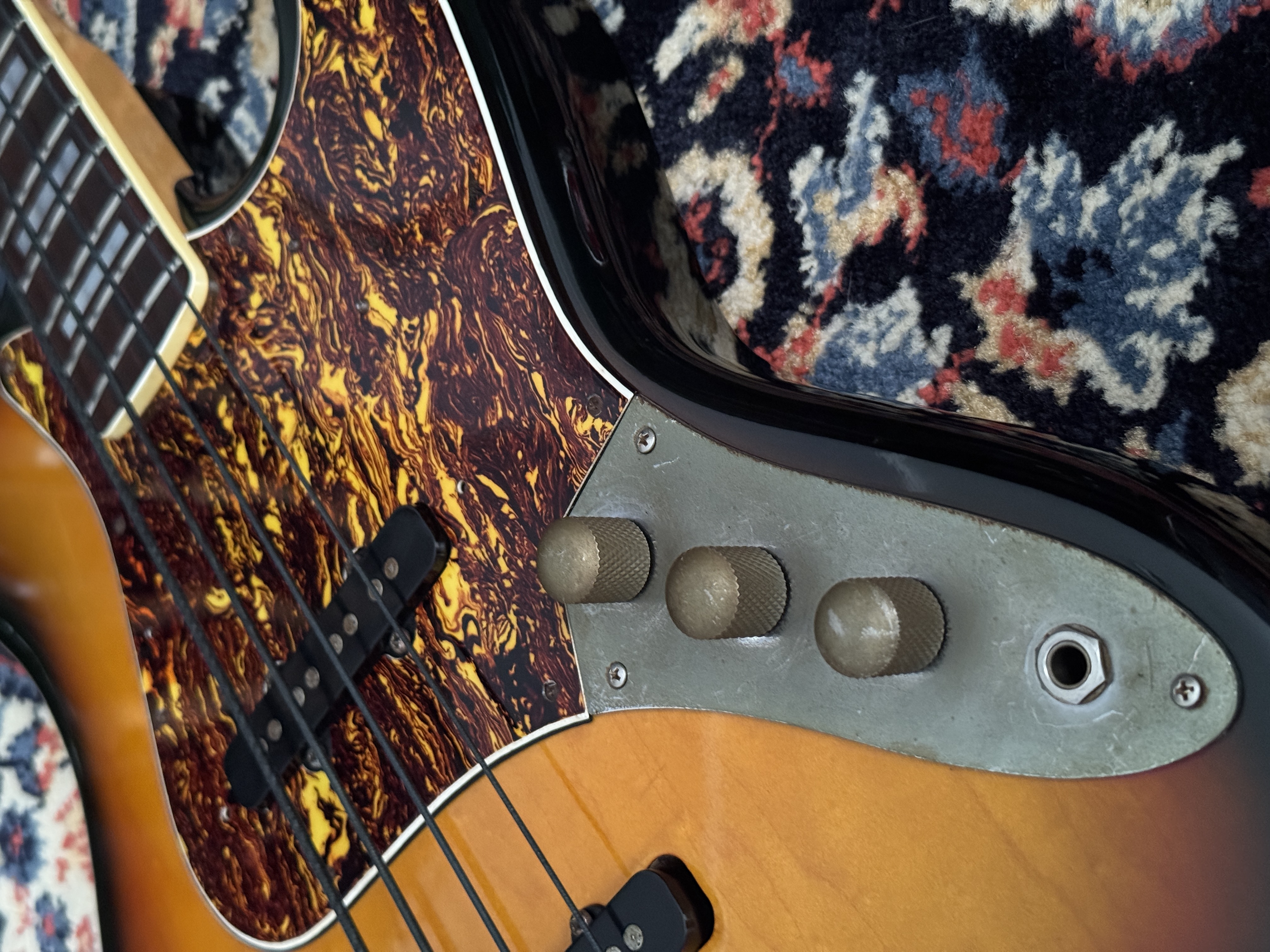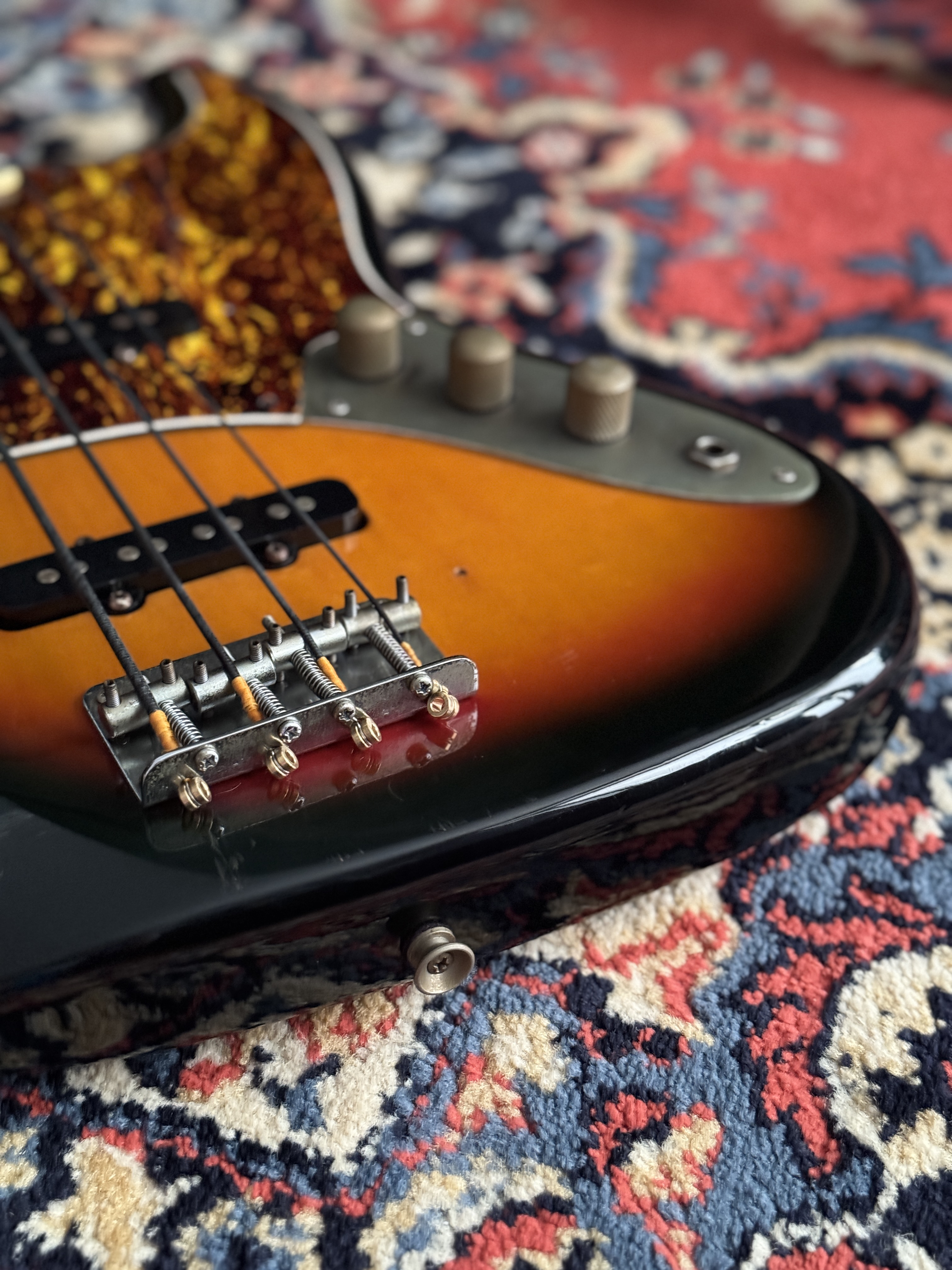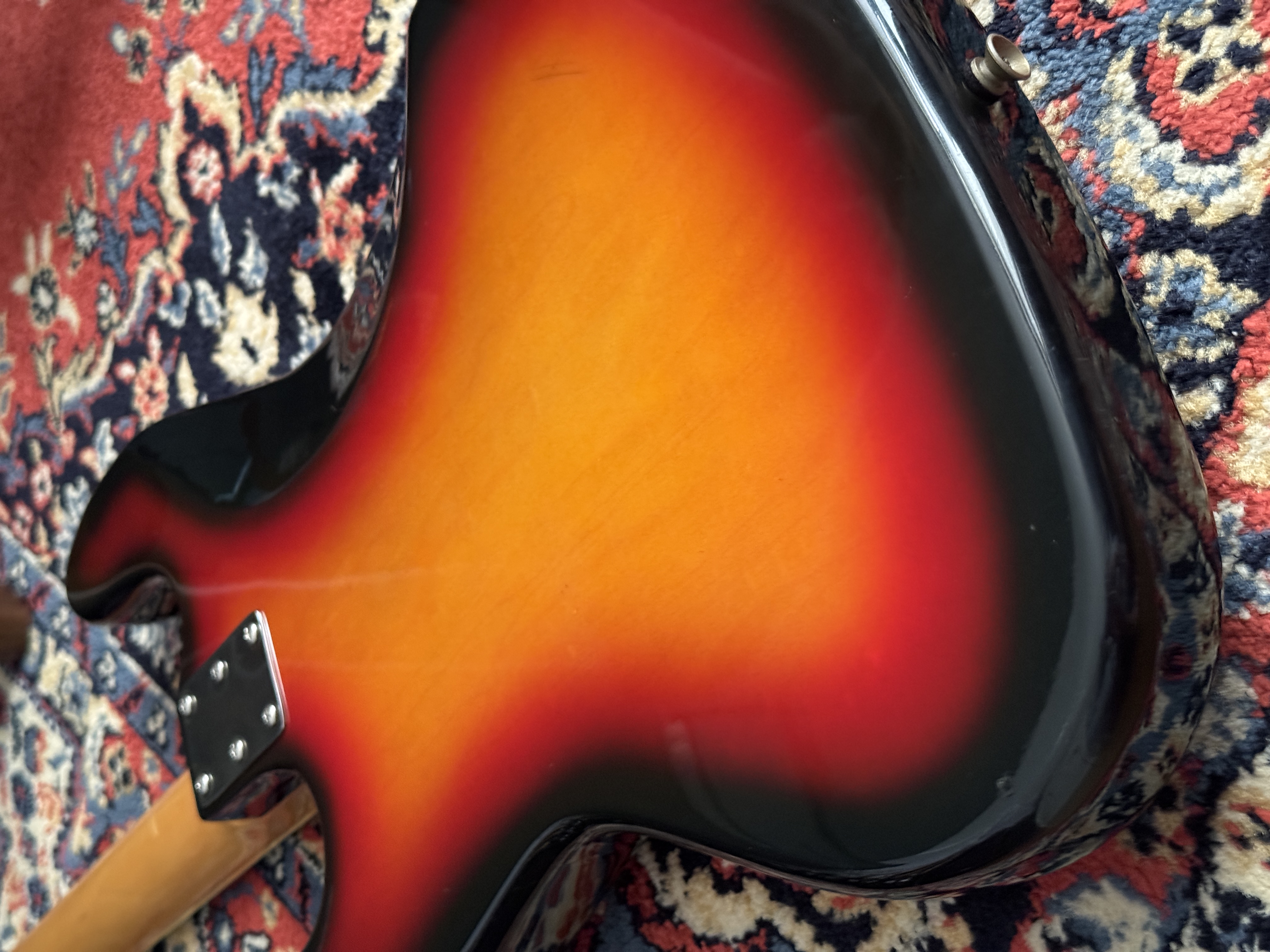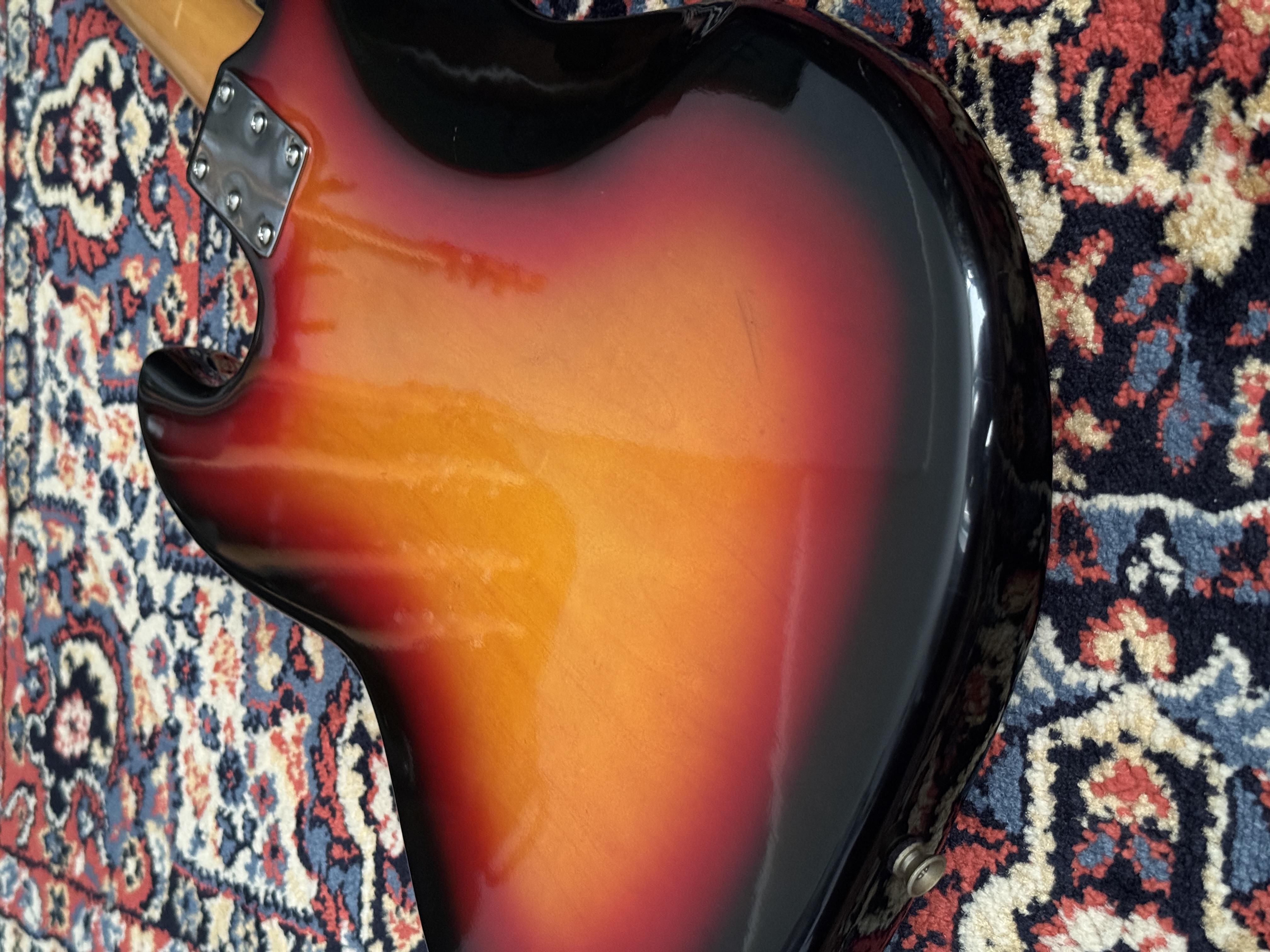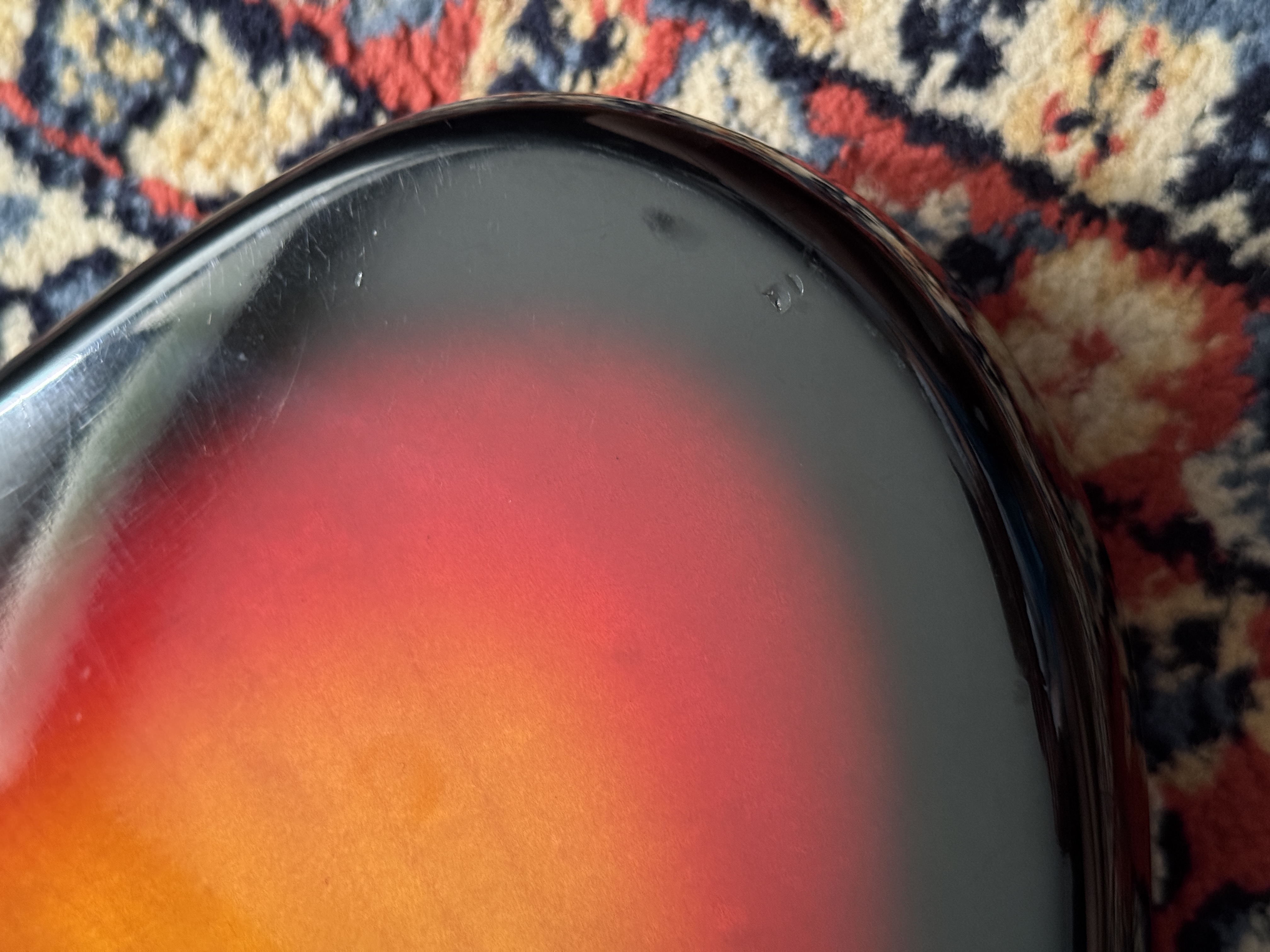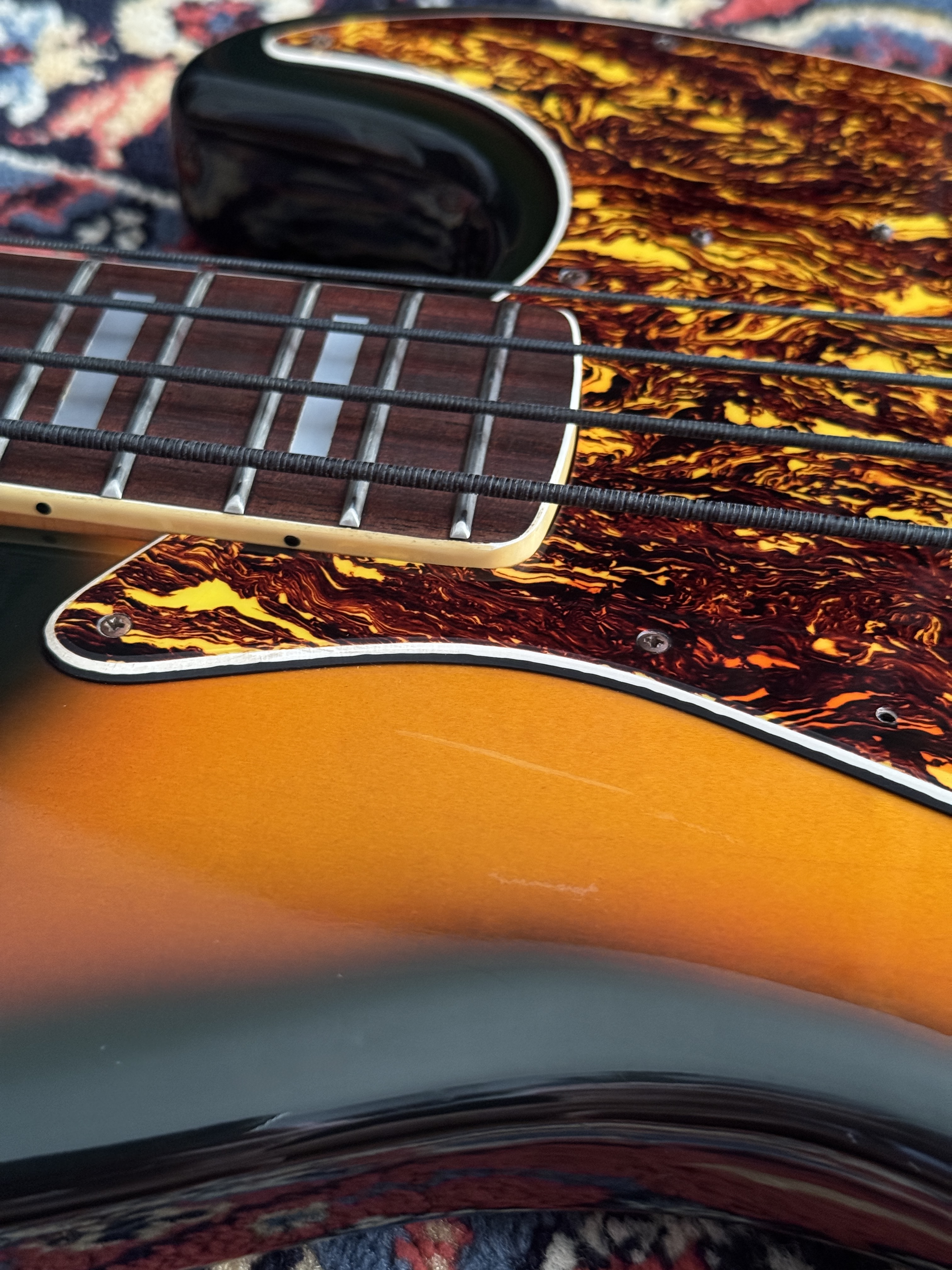
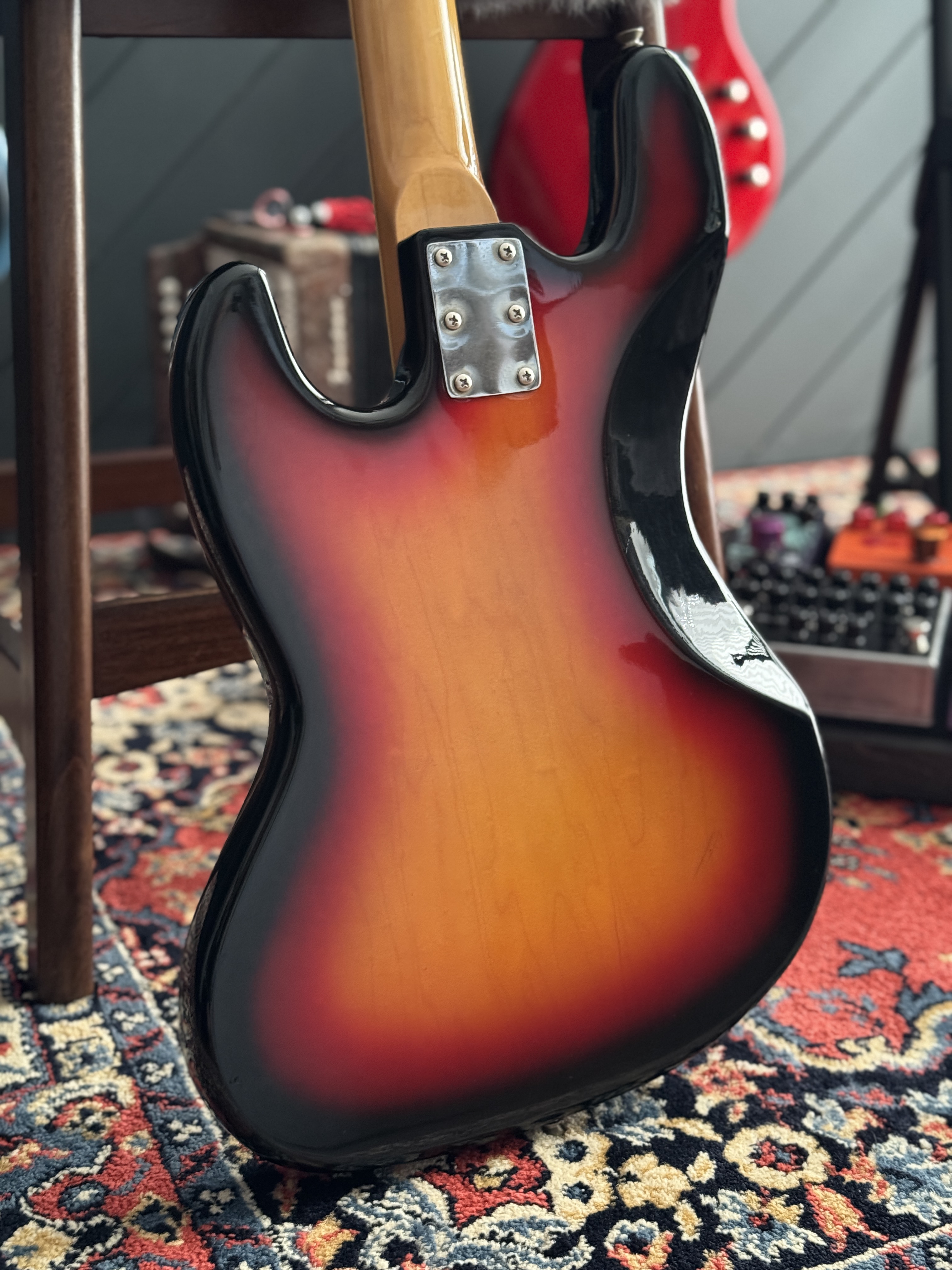
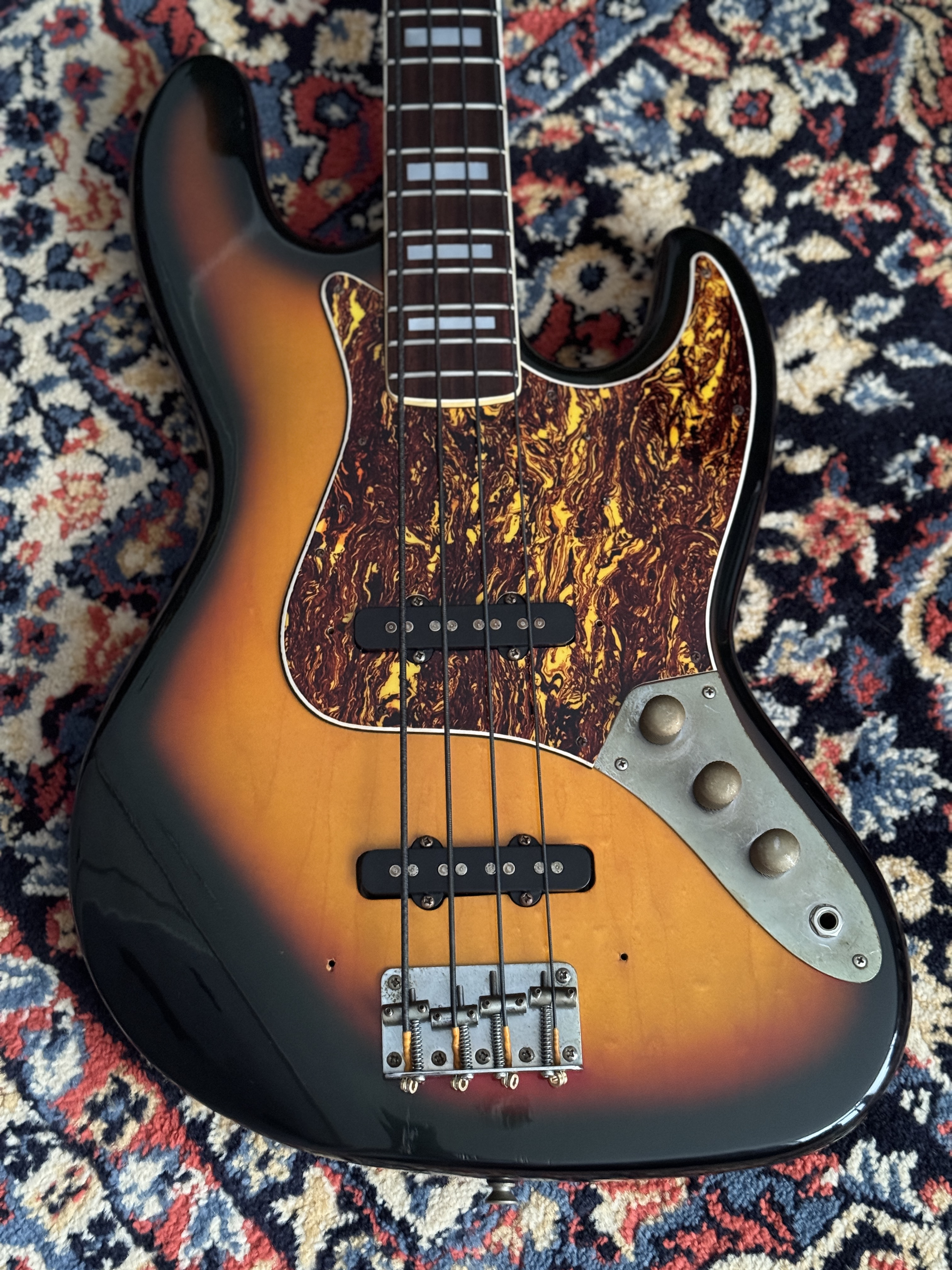
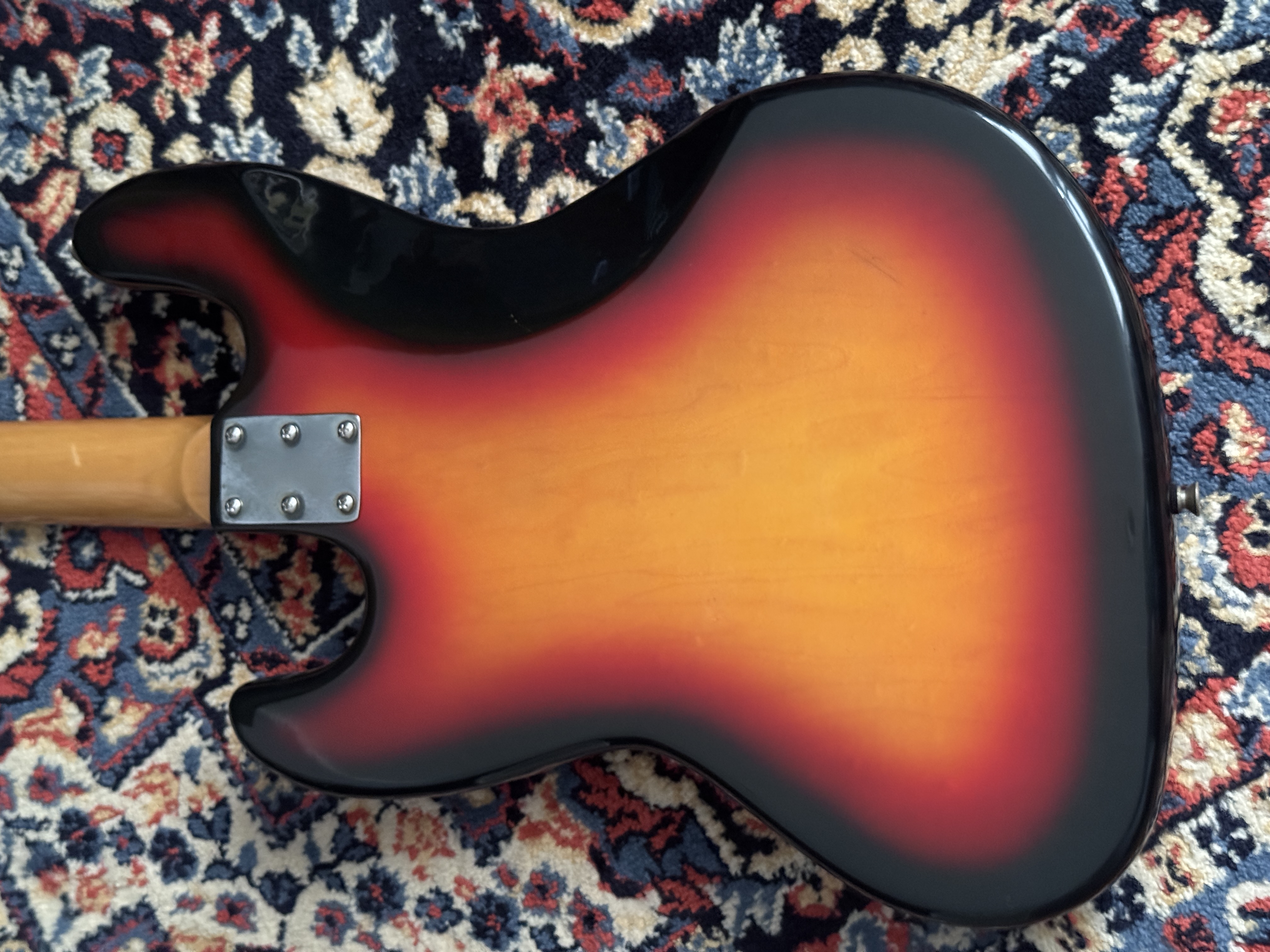
Late 1960s–Early 1970s Moridaira MB-2 — photograph in the Gruuvik Chamber collection
Moridaira · MB-2

Late 1960s–Early 1970s Moridaira MB-2

Most likely late 1960s / early 1970s · Japan

Weight · Approx. 4.5 kg

Available on Reverb← Basses
The one-liner

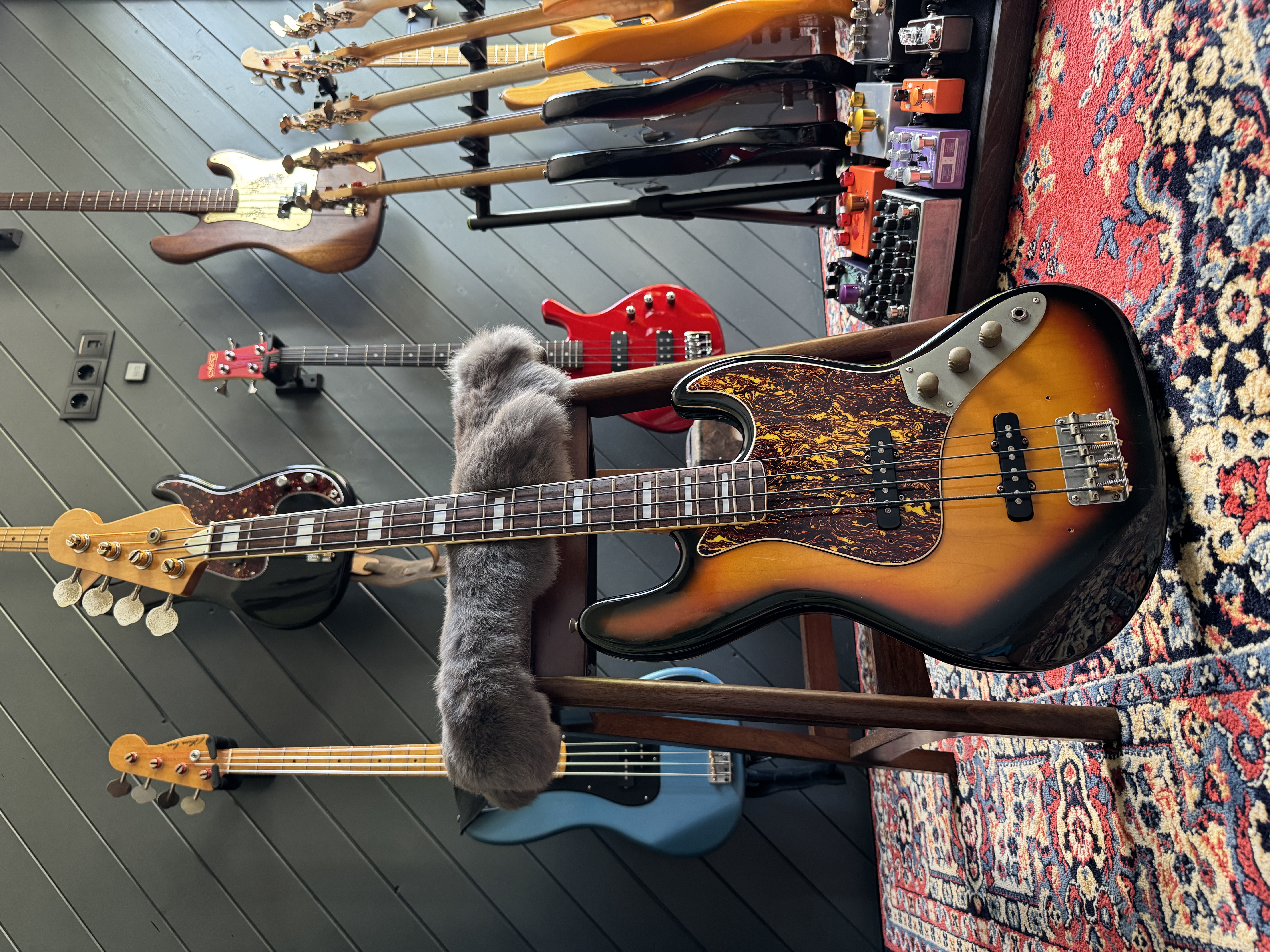
An early Japanese Moridaira MB-2, most likely from the very late 1960s or early 1970s, with a distinctly pre-standardisation Jazz-style layout. Its six-bolt neck joint, rounded single-coil pickups and slab-style nut give it a construction language quite different from the more familiar Japanese copies that followed.

The story

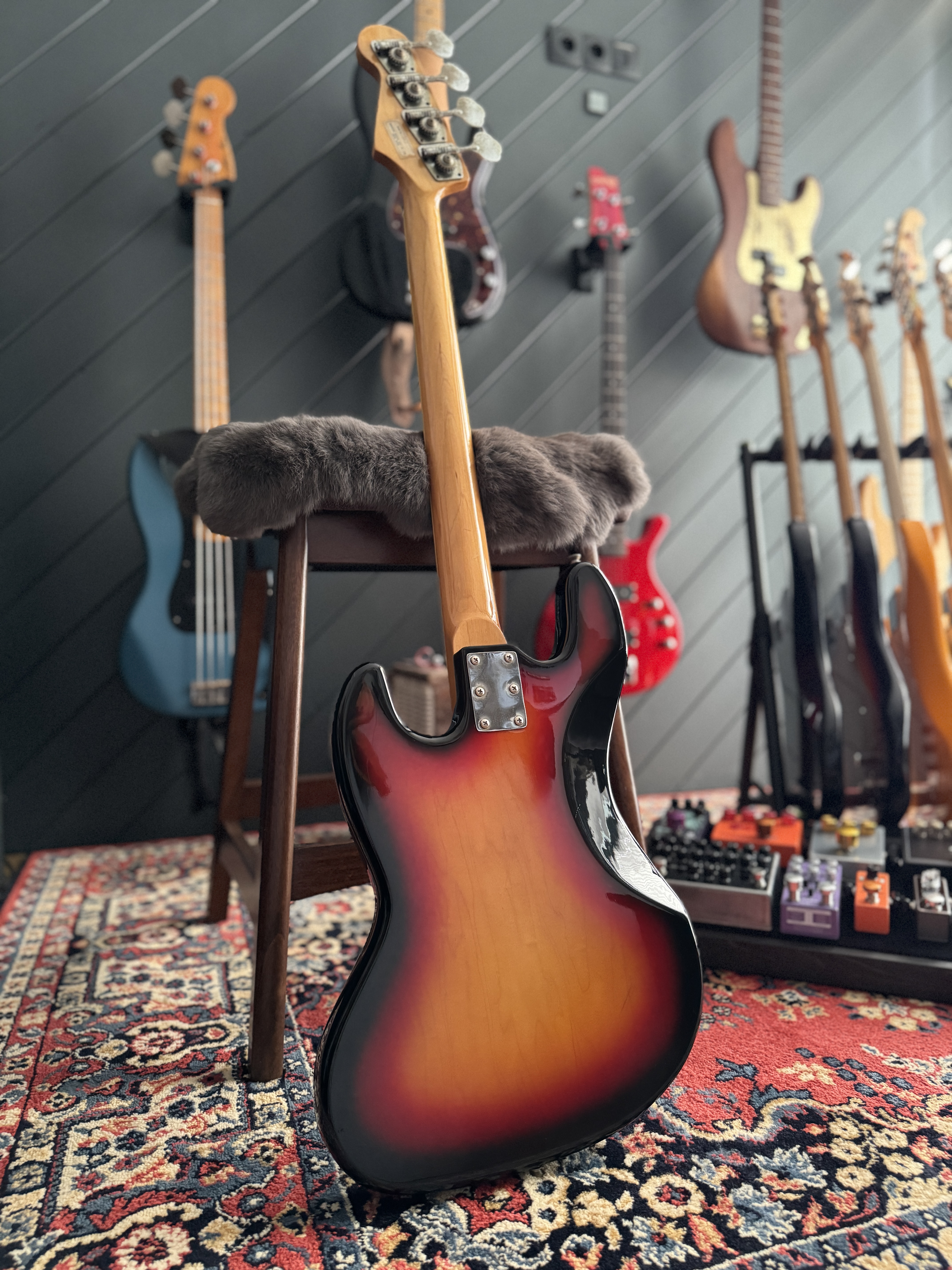
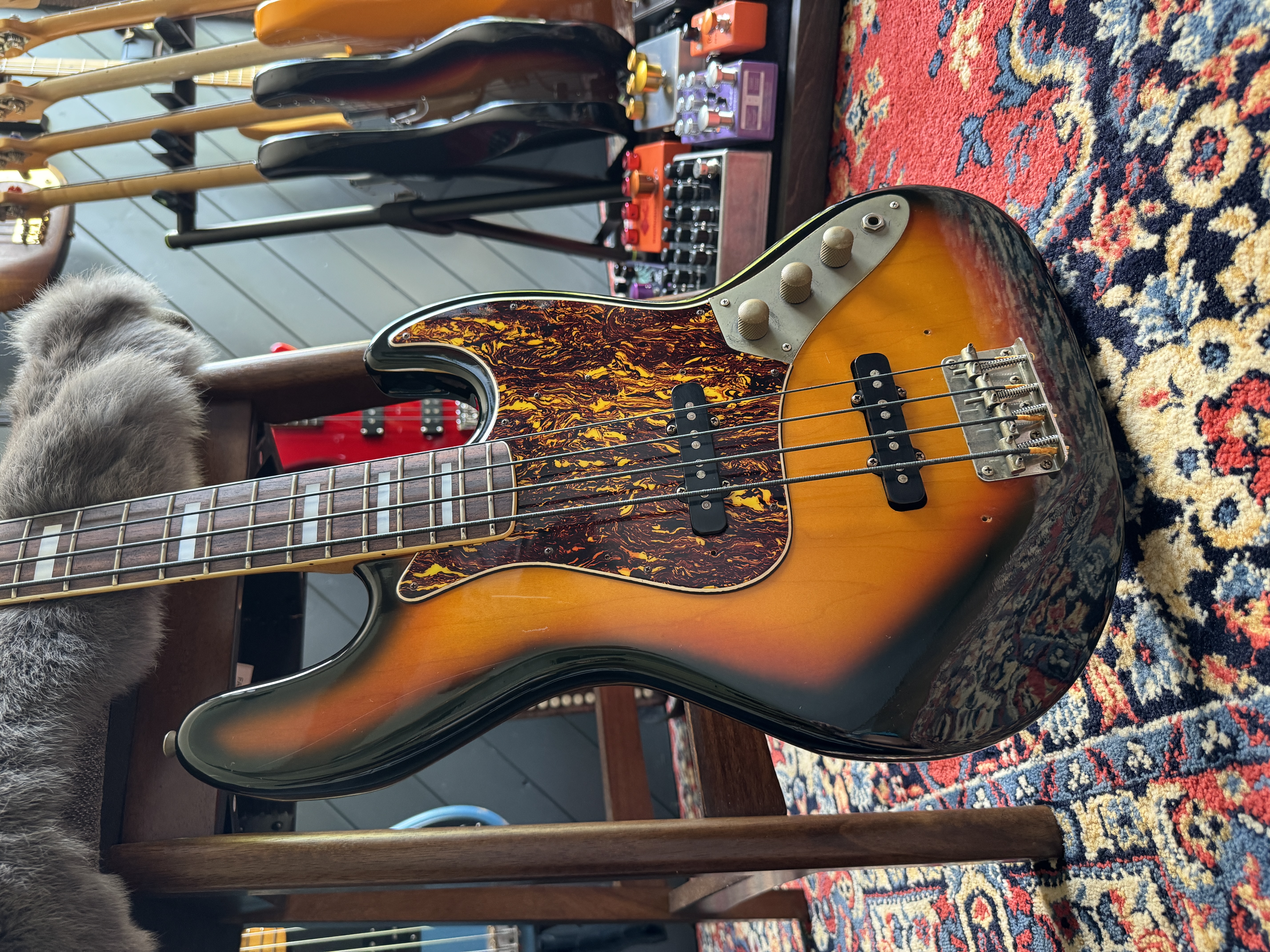
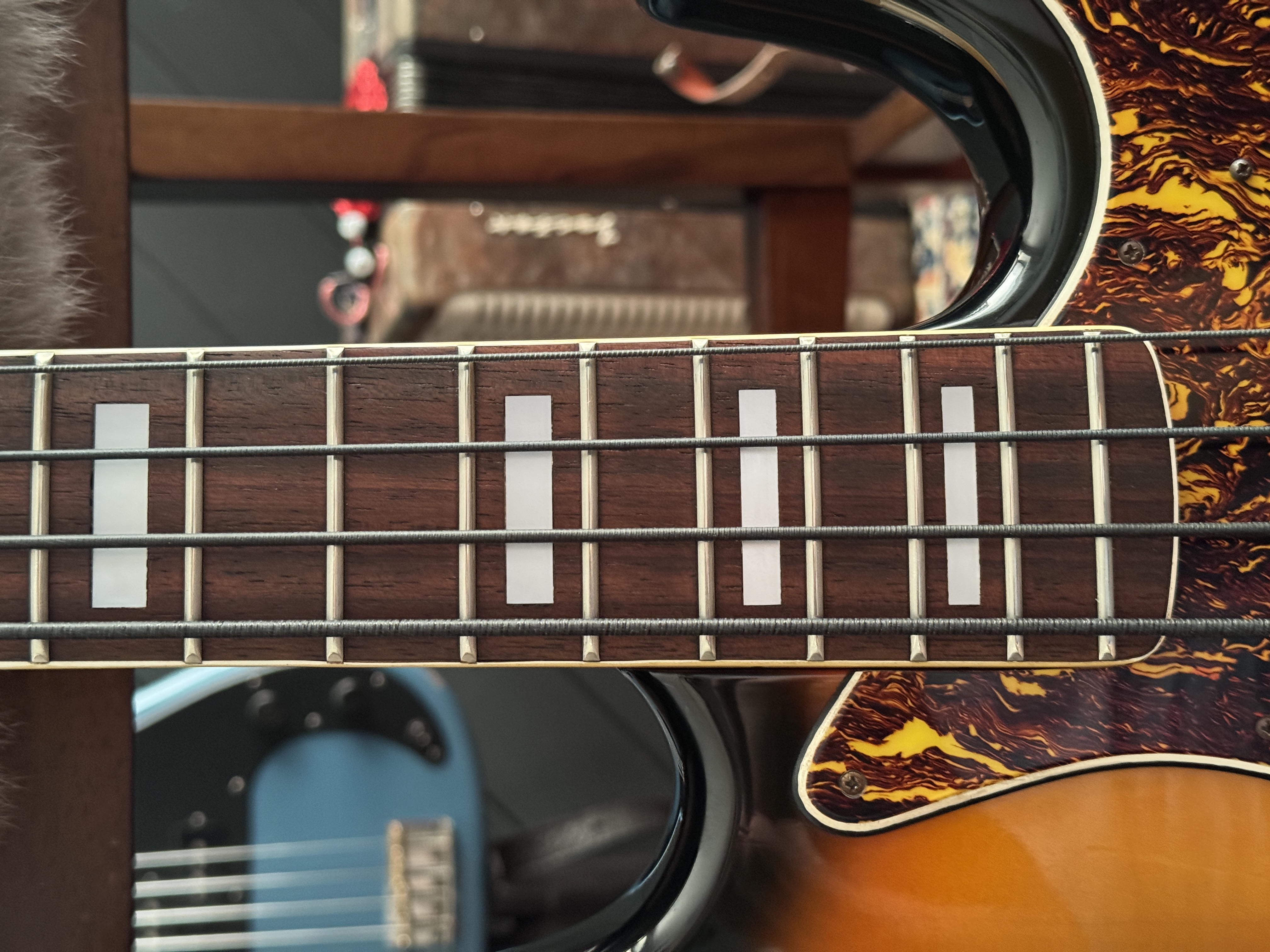
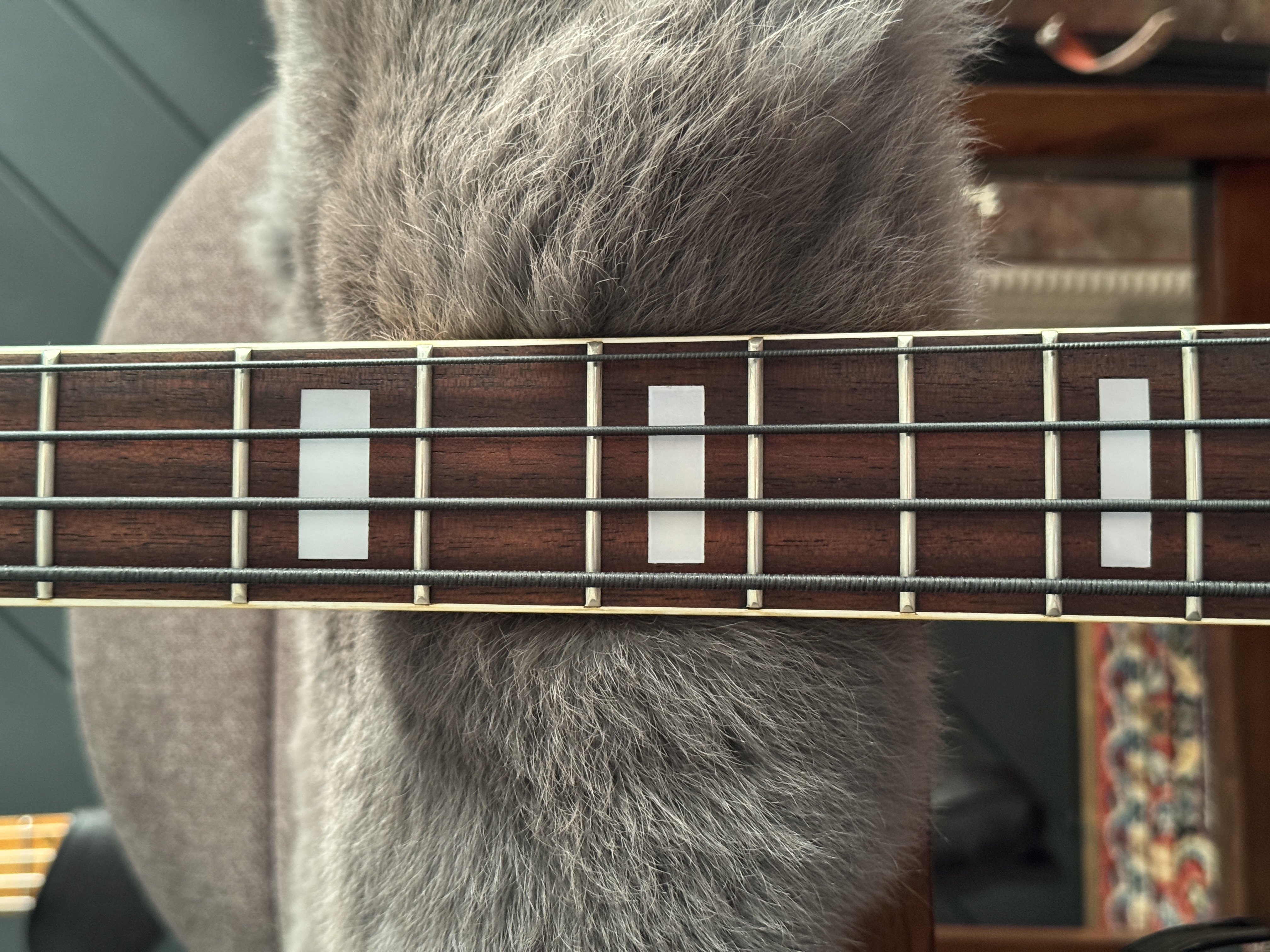
This Moridaira MB-2 is an early Japanese Jazz-style bass, most likely made in the very late 1960s or early 1970s. It belongs to a period before many construction details had settled around the familiar Fender-style formula. The six-bolt neck joint is one clue to that different approach, alongside the rounded single-coil pickups, vintage open-gear tuners and slab-style nut mounted against the end of the fingerboard. A strongly figured tort-style pickguard and an original-style Moridaira Musical Inst. Co. Ltd. Tokyo Japan label on the neck add further period character.

The instrument has a 3-tone sunburst finish, rosewood fingerboard with block inlays and binding, and passive two-volume / tone controls. Its construction and hardware are noticeably different from the more familiar Japanese Fender-style basses that became common later in the 1970s. The hardware, electronics and pickguard appear consistent with the instrument’s age, and the wiring looks old and largely untouched in the control cavity, as far as can be seen.

The bass has a warm, deep, woody response with a strong acoustic feel, and a comfortable, stable neck. At approximately 4.5 kg it has some substance, while the brand-new Pyramid Black Tape Nylon strings suit its softer vintage character. The original finger rest is included.

Inspection & research notes

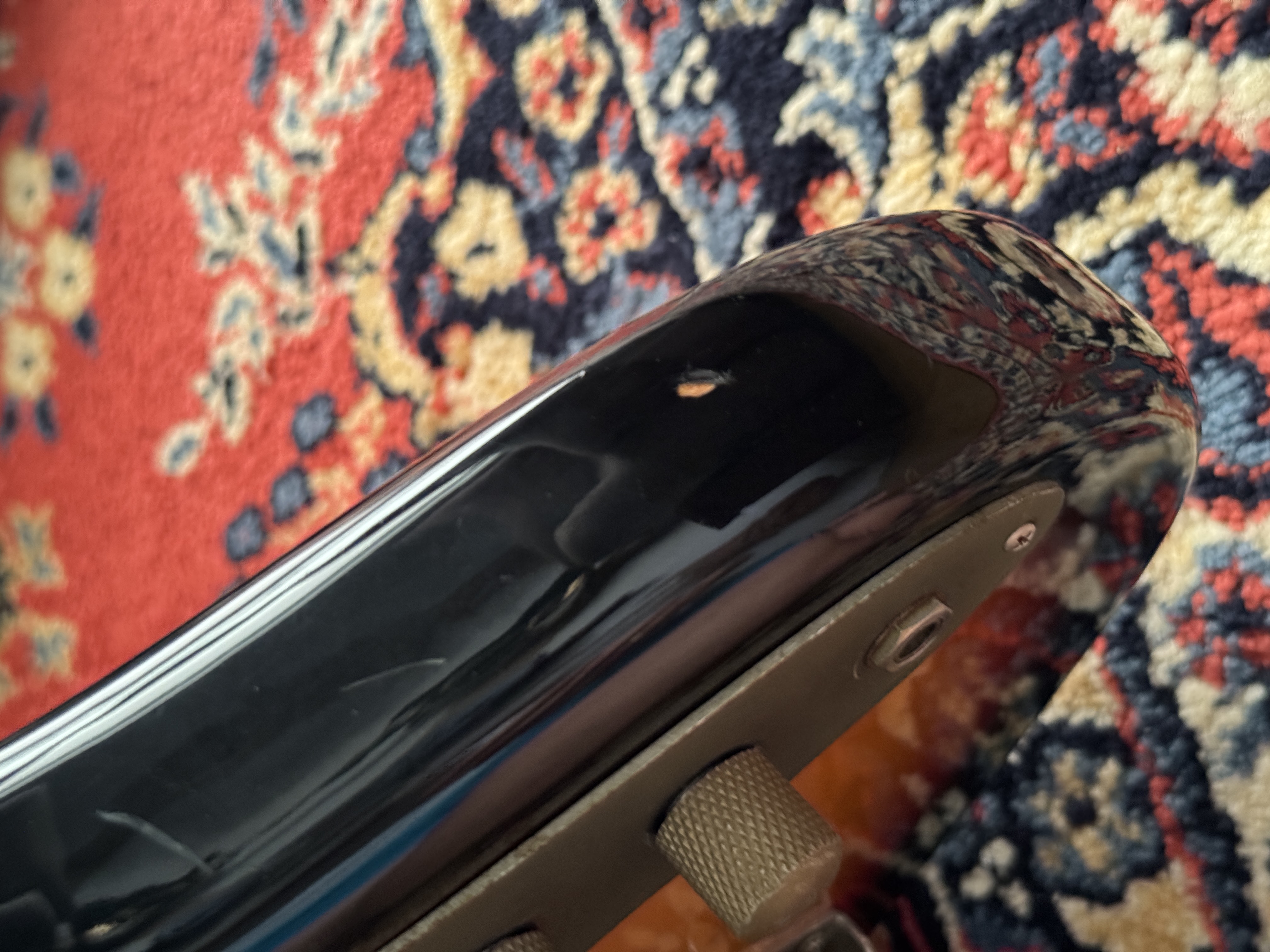
Inspection notes record that the neck is stable and comfortable to play, the electronics function correctly, and the instrument is in very good overall condition for its age. The visible finish wear is light; the original-style hardware shows oxidation and patina.

The available Reverb documentation dates this example most likely to the very late 1960s or early 1970s; the available evidence does not support a more precise year. The neck carries an original-style Moridaira Musical Inst. Co. Ltd. Tokyo Japan label. No serial number is supplied in the available documentation.
What would you like to know about this bass?

HUMAN FIRST.

Gruuvik Chamber is a real bass collection, run by a real person. Every instrument shown here is real and documented by Gruuvik Chamber; instruments marked as available are currently in the Chamber. The photography, inspection and research are real too.

This AI-assisted feature is here to help you explore the bass — its character, history and specifications. By default, answers are based on Gruuvik Chamber's documented information. If you choose Look Beyond the Chamber, identified external sources may also be used.

Ask away. If something can't be answered reliably, contact chamber@gruuvik.com.

Happy digging. Ask in any language.

Research mode
Era
Late 1960s / early 1970s · most likely
Country
Japan
Finish
3-tone sunburst
Neck joint
6-bolt
Fingerboard
Rosewood · block inlays · bound
Nut width
Approx. 41 mm
Pickups
2 × Jazz-style single-coil
Electronics
Passive
Controls
2 volume / tone
Tuners
Vintage open-gear
Weight
Approx. 4.5 kg
Strings
Pyramid Black Tape Nylon 648/1
Included
Original finger rest
Signs of life

The finish has survived remarkably well, with only light scratches, small marks and normal age-related wear. Oxidation and patina on the original-style hardware are the main visible signs of age; no functional problems have been noted.

The Gruuvik Chamber promise

INSPECTED. DOCUMENTED. READY TO PLAY.

Each instrument is examined, its known history and changes are described plainly, and setup or service is considered where needed. The aim is a bass that can go straight into music.

Inspected with careResearch and condition documentedBuilt to be played